
Optimizing your event pages for SEO is crucial to increase visibility, attract more attendees, and enhance the overall success of your events. Here’s a comprehensive guide to help you achieve this:
1. Conduct Targeted Keyword Research
Begin by identifying keywords that potential attendees might use when searching for events like yours. Utilize tools such as Google Keyword Planner to discover relevant terms. Focus on long-tail keywords that combine event type, location, and date, such as “art workshop in Brooklyn 2025” or “virtual marketing seminar June 2025.”
2. Craft Compelling and Informative Content
Ensure your event pages contain detailed descriptions that are engaging and informative. Include essential details like the event’s purpose, date, and what attendees can expect. Aim for content that is at least 300 words to provide sufficient information for both users and search engines. The following is an example of a blog post with at least 300 words: Venue Marketing Strategies That Maximize Bookings
3. Optimize Meta Tags and Headings
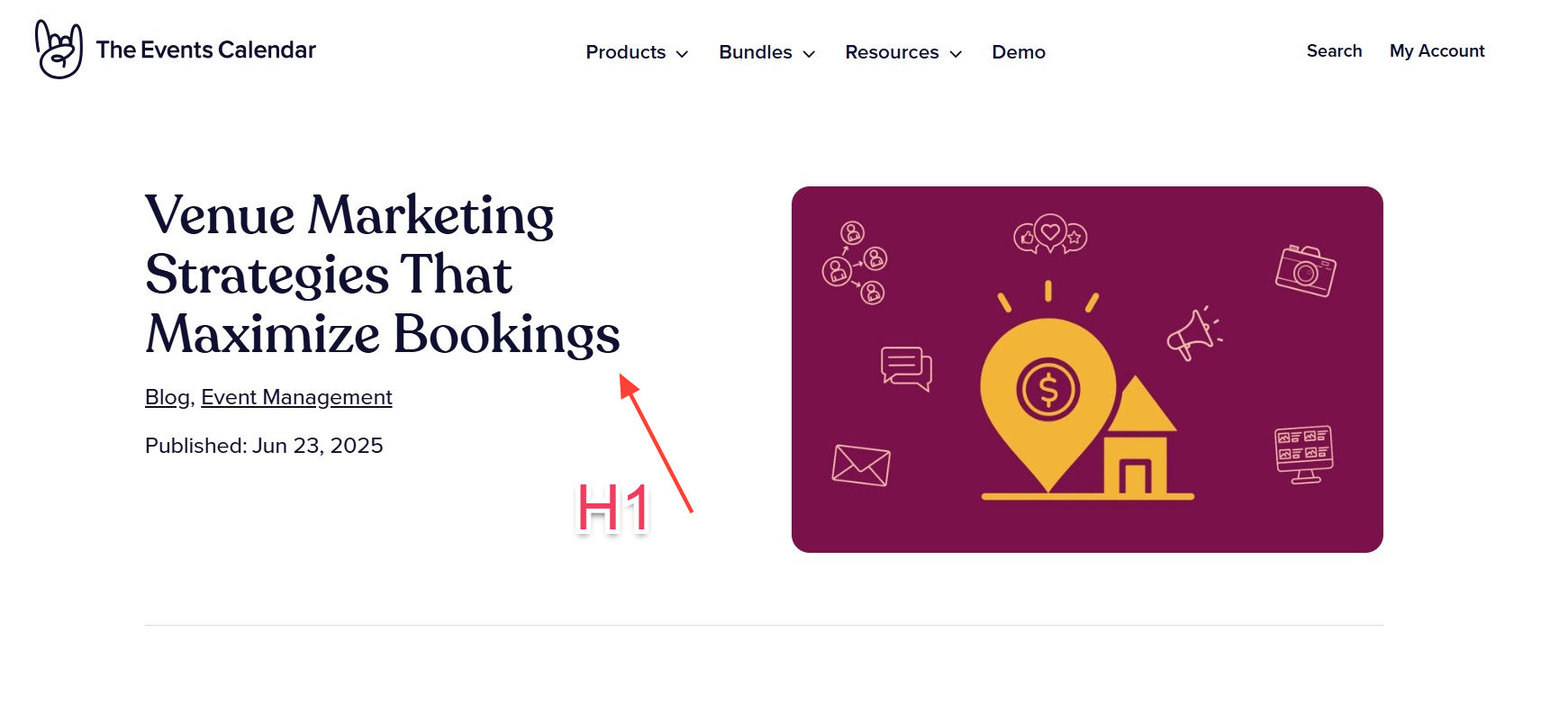
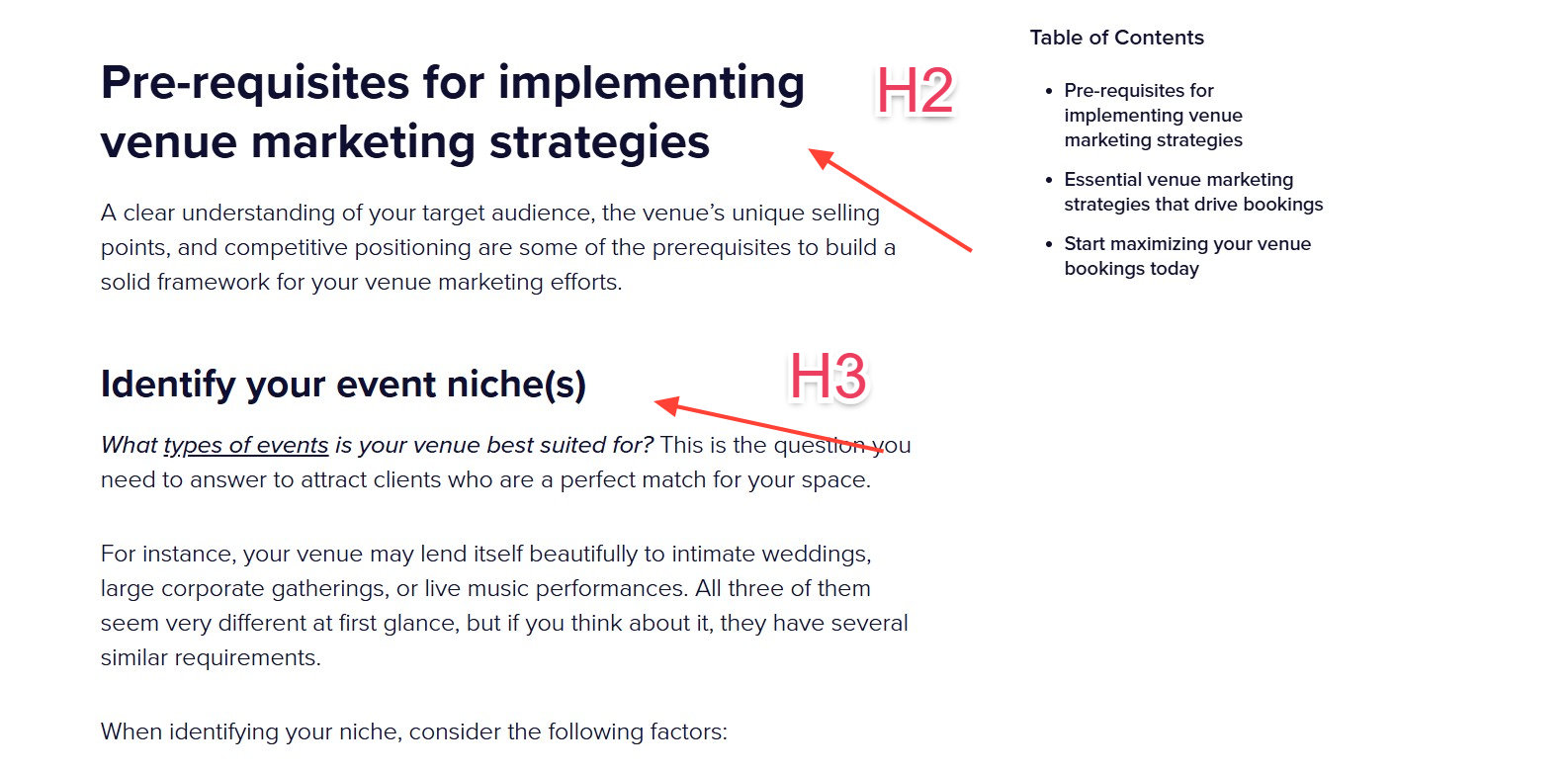
Create unique and descriptive title tags and meta descriptions for each event page. Incorporate primary keywords naturally to improve search engine rankings. Use heading tags (H1, H2, H3) to structure your content, making it easier for search engines to understand the hierarchy and for users to navigate the information.
This blog post shows how we used the heading tags on our site:
4. Implement Event Schema Markup
Utilize structured data (schema markup) to provide search engines with detailed information about your events. This can enhance your listings in search results with rich snippets, displaying details like date, location, and ticket information. Tools like Google’s Structured Data Markup Helper can assist in adding this to your pages.
5. Build Quality Backlinks
Increase your event page’s authority by obtaining backlinks from reputable websites. Reach out to local blogs, industry influencers, and partners to share your event.
6. Ensure Mobile-Friendliness and Fast Load Times
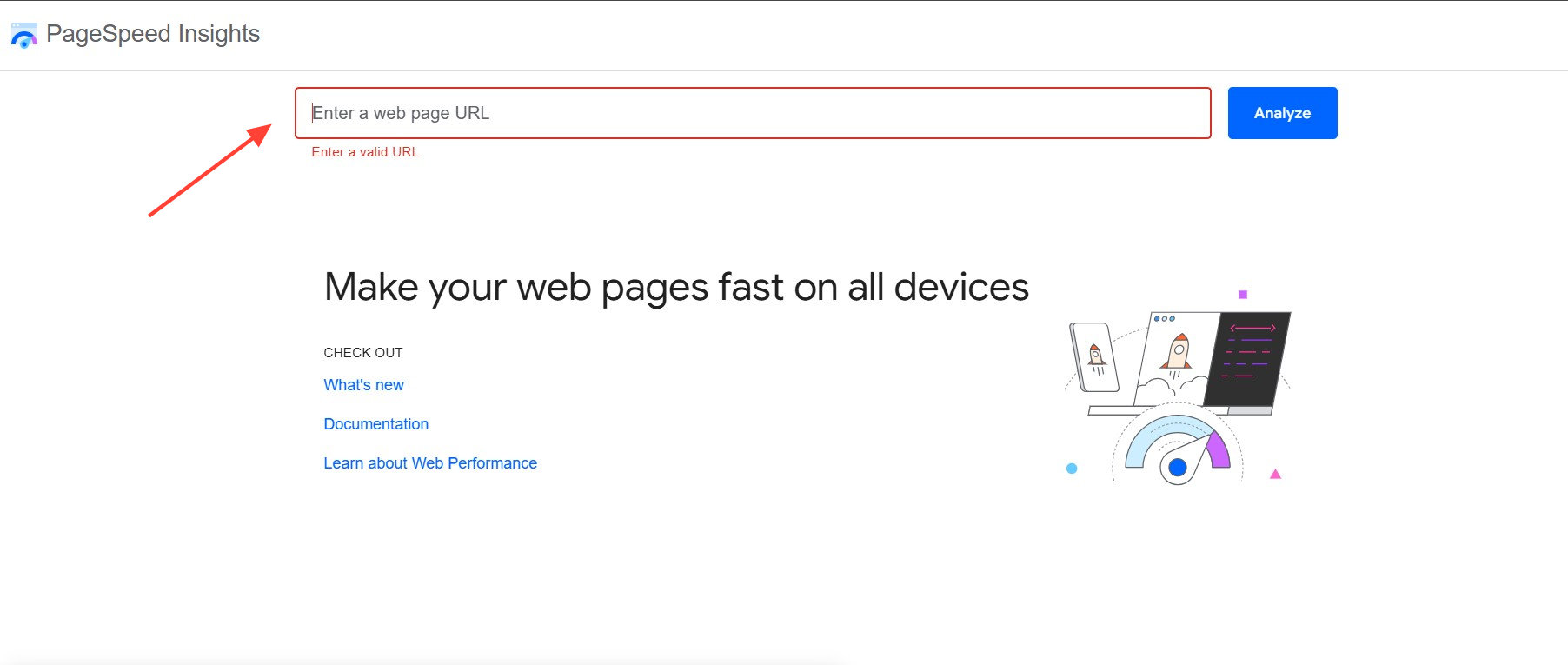
With a significant number of users accessing websites via mobile devices, ensure your event pages are responsive and load quickly. Use tools like Google’s PageSpeed Insights to identify and fix performance issues, enhancing user experience and SEO rankings.
7. Monitor and Analyze Performance
After implementing SEO strategies, regularly monitor your event pages’ performance using tools like Google Analytics and Google Search Console. Track metrics such as organic traffic, bounce rates, and conversion rates to assess the effectiveness of your SEO efforts and make necessary adjustments.
By following these steps, you can enhance the visibility of your event pages, attract a larger audience, and ensure the success of your events.